Resource Competition: Old Challenge, New Solutions
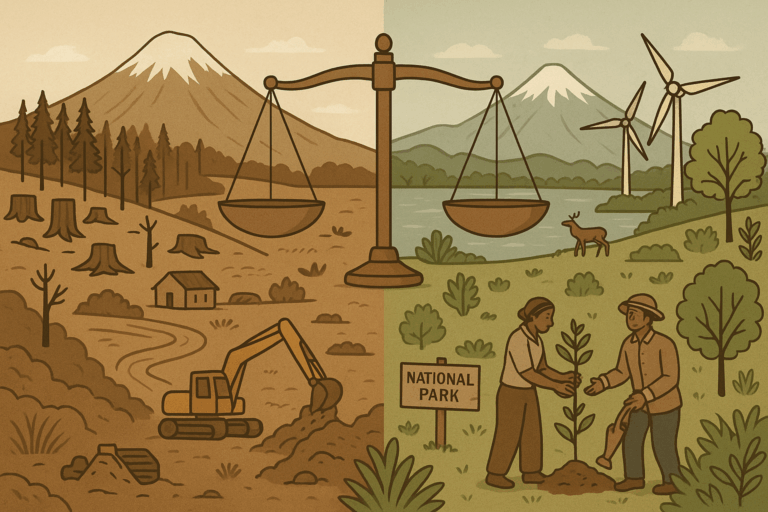
Resource competition—over land, water, forests, minerals, and more—has always been at the heart of both ecological systems and human societies. While this challenge is not new, it remains as fundamental as ever to conservation and sustainable development. Global demand for critical resources is intensifying, driven by energy transitions, climate adaptation, and population growth. As a result, the complexity and stakes of resource competition are rising.
In this context, the recent Global Resources Outlook 2024: Bend the Trend report from UNEP highlights that the old model of resource-intensive growth is no longer viable. We need a new approach—one grounded in sustainable resource management and improved resource productivity. Some foundational strategies are: (a) increasing productivity; (b) reducing waste; and (c) promoting recycling and reuse.
But to make these strategies effective at scale, we must turn to smarter policy tools.
What’s New? Smarter, Fairer Solutions
While tools like environmental taxes and efficiency standards have been around for decades, recent research and policy experience point to more refined, equitable ways of using them. Some of the innovations include:
Revenue recycling: revenues are redistributed through rebates, social programs, or investments in public services.
Targeted support: complementary policies to protect vulnerable groups. Examples include subsidies for efficient appliances, support for public transit, or exemptions for small producers.
Smart regulation through co-design: Beyond setting top-down standards, successful policies increasingly involve co-design with local communities. This participatory approach ensures regulations reflect local contexts, strengthen social legitimacy, and increase compliance. Smart policies are not only technically sound—they are politically and socially informed.