The Economics of Pollination Services
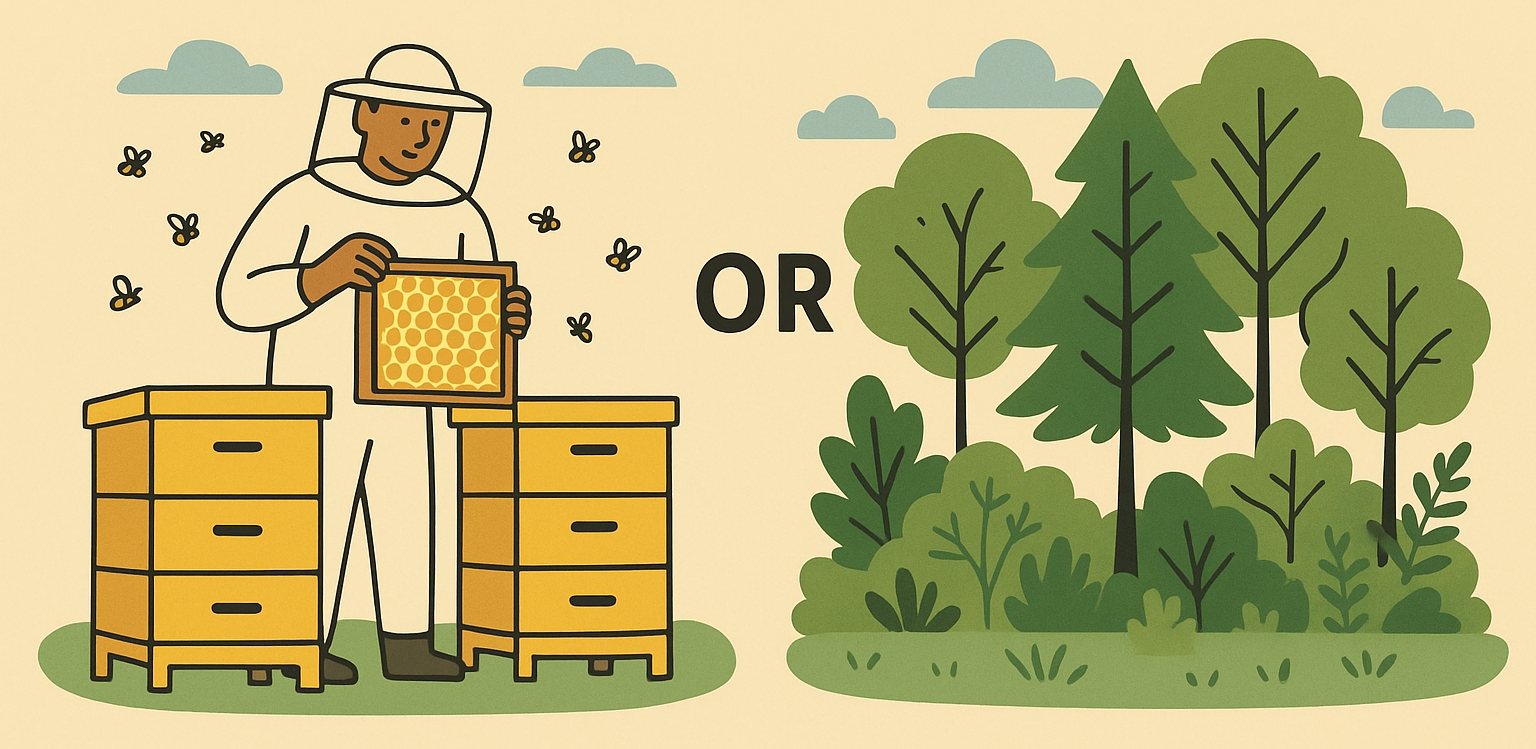
Recently, I came across a program describing farmers in southern Brazil renting beehives to pollinate their orchards. The topic caught my attention, as it illustrates a case of how ecosystem services—specifically pollination—are being internalized through market mechanisms. Although this practice is relatively new in Brazil, it has long been established in several regions, particularly in the United States.
According to Goodrich et al. (2019), the dependence of almond producers in California on rental hives has increased substantially over recent decades, to the point where producers now import hives from other states. During the flowering season, beehives are transported across the country. The average almond pollination fee has increased since 2007, reaching approximately US$190 per colony in 2018 (Bond et al., 2021). Despite this market expansion, the sector faces many operational and ecological challenges, including variability in hive quality, the survival rate of bees after pollination, and the risk of introducing invasive species.
In Brazil, as mentioned in the program, the use of managed bees has also been expanding as farmers recognize their contribution to agricultural productivity. However, the market remains less formalized. According to da Rosa et al. (2018) between 2013 and 2015, the average rental fee for orchard pollination in southern Brazil was around US$17 per hive, an order of magnitude lower than in California, reflecting, among many other things, crop dependency differences.
It seems to me that the expansion of hive rental markets reflects a market response to the decline of natural pollination services, often linked to pesticide use, and other unsustainable agricultural practices. In this sense, it represents a short-term adaptation to a market failure: the undervaluation of ecosystem services, which results from:
- Unpriced externalities from agriculture
- The public-good nature of wild pollinators
- Information gaps about their value and ecological role, and
- Institutional and market structures that favor short-term private adaptation (hive rentals) over long-term ecosystem restoration
From an economics perspective, it would be interesting to answer some questions such as:
- How do pollination service fees compare to the costs of ecological restoration or the adoption of biodiversity-friendly agricultural practices? and
- Could investments in restoring native vegetation or reducing pesticide use generate more sustainable (and potentially more cost-effective) pollination benefits in the long term?
References:
da Rosa, J. M., Arioli, C. J., Blochtein, B., Agostinetto, L., Grützmacher, A. D., & Botton, M. (2018). Diagnosis of directed pollination services in apple orchards in Brazil. Revista Brasileira De Fruticultura, 40(2). https://doi.org/10.1590/0100-29452018234
Bond, Jennifer K., Claudia Hitaj, David Smith, Kevin Hunt, Agnes Perez, and Gustavo Ferreira. June 2021. Honey Bees on the Move: From Pollination to Honey Production and Back, ERR-290, U.S. Department of Agriculture, Economic Research Service.
Goodrich, B. K., Williams, J. C., & Goodhue, R. E. (2019). The Great Bee Migration: Supply Analysis of Honey Bee Colony Shipments into California for Almond Pollination Services. American Journal of Agricultural Economics, 101(5), 1353–1372. https://doi.org/10.1093/AJAE/AAZ046